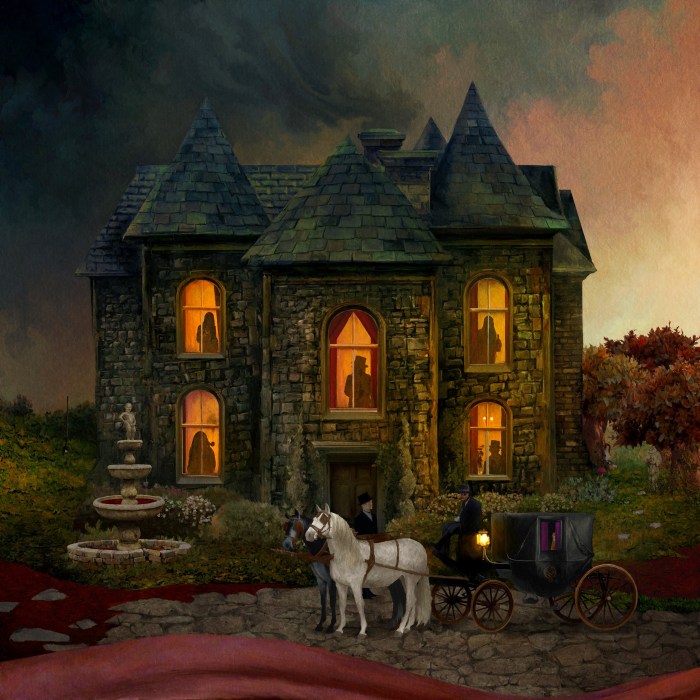
New music from Dream Theater, Tool, and now Opeth? I must say, 2019 is a pretty exciting year to be a prog fan. Opeth’s 13th album is the latest installment in a very polarizing strand of Opeth releases. As a band who made a name for themselves and built a fanbase in the late 90s and early 2000s as a progressive death metal band, their transition to progressive rock has been upsetting to some purists, as one might expect. Even fans of the band who were more open to this change in sound have largely had lukewarm reactions to the band’s output from the past decade. So how does In Cauda Venenum fit into Opeth’s discography?
Well, it more or less continues the streak they’ve been on. This is 100% a prog rock album. While there’s certainly a satisfactory amount of musically heavy moments, this album also overflows with softer, more restrained moments, as well as unexpected styles and instrumentation choices. All vocals on this album are melodic, no growling to be found. Opeth’s death metal approach to writing and performing is gone without a trace on this album. And while I’ll gladly admit that the band’s earlier releases, particularly Still Life and Blackwater Park are their best, I certainly won’t complain about the bands more recent direction either. And as for In Cauda Venenum?
Honestly, this album is really doing it for me. Whether you love or hate Opeth’s current sound, they have certainly found their footing within it. Not only does this album contain a fairly even mix of soft and heavy music, almost every individual song does as well. Opeth have always been an effective prog band, because of their ability to write longer songs that stay consistently dynamically interesting. And this album is no exception. While this album lacks heaviness when compared with the bands earlier work, it certainly isn’t lacking in intelligence and creativity, and for me, those have always been a much more integral part of what makes Opeth great.
So while the heavier musical passages on this album aren’t nearly as heavy or aggressive as on their earlier releases, how do the softer passages compare? Well, these actually account for some of the most interesting moments on this album. These moments showcase instrument choices such as beautiful acoustic guitar work on tracks such as “Heart in Hand” and “The Garroter,” string sections on “Next of Kin” and once again, “The Garroter” (interesting song, that one. More on that momentarily), and gorgeously haunting piano on “Lovelorn Crime.” The Garroter is the stylistic black sheep of the album. A heavily jazz-influenced tune, it opens with a virtuosic acoustic guitar solo, features dynamically intense strings, reminiscent of Led Zeppelin’s “Kashmir,” as well as an extremely jazzy electric guitar solo, unlike anything one might expect to hear on an Opeth album. None of this is to discount the more upbeat moments of the album. Tracks such as “Charlatan” and “Dignity” are unforgivingly heavy prog rockers that remind you just what band you’re listening to, with intense, blistering guitar and drum work. The vocal performances are beautifully mesmerizing, and often hugely layered in a choral fashion, creating moments so powerful, you don’t even miss the growling.
This album is just as well-written lyrically as it is musically. That being said, it will probably bum you out a little bit. And yeah, I know Opeth and nihilism go together like peanut butter and jelly, so I didn’t really expect any different, but at least during the band’s death metal era, you got some pretty good headbanging therapy to balance things out. This album’s lyrical content overflows with self-loathing, distrust of others, political anger, bitterness towards internet culture, and death. Lots and lots of death. Add in a couple of songs about forced marriages and parental abuse, and this ain’t exactly The Beach Boys. Not that this is necessarily bad, but it can certainly be draining after a runtime of over an hour.
Sequencing issues with this album, while minor, only magnify the project’s more draining qualities. The slower, softer songs bring out the negative sentiments within the lyrics the strongest, and in the last leg of the album, we get four of these in a row. And these aren’t bad songs, not at all. “Universal Truth” features melodies and instrumental lines that are hauntingly dissonant in a way that is almost reminiscent of medieval folk music. “The Garroter” features the aforementioned jazz qualities, which keep it extremely interesting. “All Things Will Pass” is a heavy slow-burner that wraps the album up quite effectively. The only complete throwaway is a song called “Continuum,” the slowest and most lyrically miserable song on the album. Yeah, this one’s a chore. But apart from that, these songs do deserve to be on the album, but perhaps should have been mixed in with songs earlier on in the album, which would make for better musical contrast
Opeth will probably never make an album as good as Blackwater Park again. But who would honestly expect them to? This is why it is important for bands to evolve. When a band has exhausted a certain sound or style, the best thing they can do is to shake things up and keep things fresh. Opeth’s most recent music surely isn’t in the same weight class as their early 2000s output, but it is clear that the direction they have been taking their most recent music is done in the interest of creating the best music they can at this point in their career. I think they’ve grown into their prog rock sound quite nicely, and a few minor sequencing issues aside, I would consider In Cauda Venenum Opeth’s most accomplished album of this decade.
Score: 8/10
Favorite Song(s): Next of Kin, Dignity, The Garroter, Charlatan
Least Favorite Song(s): Continuum, Garden of Earthly Delights
 Phil Klinker Music Reviews