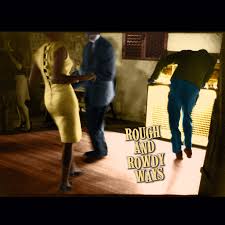
The Ghost Inside – The Ghost Inside

With new releases slowing down drastically due to COVID-19, I had to do a little bit of deep digging to come up with a solid review schedule for this month. For instance, I decided to check out the new album from The Ghost Inside, a popular-ish metalcore band from the late 2000’s and early 2010’s that I really hadn’t paid much attention to at all. Upon digging through their discography a little bit, I discovered that while much of their work was fairly hit-or-miss, and frankly pretty derivative of metalcore bands who came before and did it better, their 2012 album, Get What You Give is actually pretty solid overall. So hey, maybe if they were capable of creating a record so tight, riffy, and all around well written in 2012, they could do it again in 2020, right? Well, that’s not really what happened. If I’m being honest, The Ghost Inside’s self-titled album really doesn’t do much for me at all. While Get What You Give, and even select moments from other records, show at least some baseline level of versatility, this album is pretty sonically stagnant. We get all the drop-tuned guitar chugs a metalcore fan could want, but no memorable riffing or lead work, and no real fluctuation in dynamics. Classic metalcore acts such as Killswitch Engage and Avenged Sevenfold were masters at keeping fans engaged, because they knew how to weave in softer, more melodic moments to contrast against the heavier, more aggressive ones. And while The Ghost Inside have shown us in the past that they can do that, they do it so rarely here, that when it does occur, it’s more off-putting, and ultimately confusing, than anything else. Aside from these moments, guttural vocals rule the majority of this album, even in moments where the instrumentals would be better complimented by melodic vocals (this is actually a problem I have with the band’s entire discography), and messy production that lacks space and dynamic range prevents the vocals from standing out and shining when they need to the most. Not that you’d be missing anything if you didn’t catch any of these cliché, by-the-numbers, overly dramatic metalcore lyrics. Metalcore may not be my favorite genre, but even I know that solid riffs and melodies are essential to success within the genre. And they’re really nowhere to be found on this album. The Ghost Inside really isn’t a horrible listen, but it’s not one that adds anything to the story of this band, or the genre as a whole, either. All it really does is solidify this band as a one-trick pony. If you want to hear a modern band that does that trick better, I recommend checking out Wage War.
Score: 2/5
Protest the Hero – Palimpsest
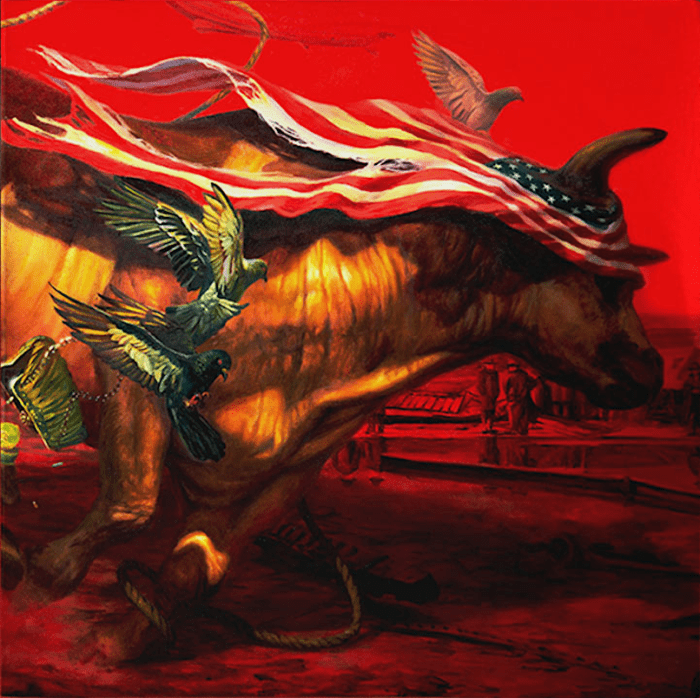
Here’s a somewhat obscure band from the prog metal scene that most of you have probably forgotten about. Falling more on the mathcore side of things, this band can certainly be an acquired taste. But with this album, they’ve made something that’s completely in touch with their quirky and complex style, while still being palatable enough that most fans of metal can probably get behind it. This record is laced with epic, power metal inspired instrumentals, and soaring lead vocals that remind of Bruce Dickinson, while guttural vocals are relatively scarce, especially for a Protest the Hero album. The instrumentals are largely centered around the fast, yet at times staccato guitars, drenched in distortion and heavy compression, sounding almost like 8-bit arcade game music. Throughout the record, we hear moments of bass matching these guitar lines, with a fat, meaty distorted tone, though it sits a little low in the mix for my taste, so you may not hear it unless you’re listening for it. All of this is livened up by ever-blasting drums that just don’t quit. Not much dynamic flexibility for a 52-minute runtime, but the seemingly effortless fluidity and tightness of the band’s playing is enough to mesmerize listeners for the full duration. And the addition of pianos and strings throughout definitely add depth and power. Conceptually, the lyrics are very politically driven (definitely a theme this year), but with a bit more positivity. Don’t get me wrong, these guys clearly aren’t fans of the president, but without giving too much away, there’s a running theme of using his “Make American Great Again” slogan to reflect on everything they find to be truly great about the United States. It’s definitely an interesting change of pace to hear a band air their grievances, but with such optimistic overtones. Overall, this is probably my favorite Protest the Hero album to date.
Score: 4/5
Bob Dylan – Rough and Rowdy Ways
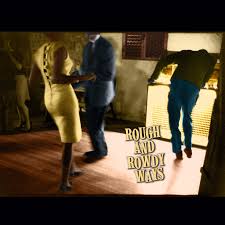
It’s been a minute since Bob Dylan released anything I even remotely cared about. Who wants to hear three covers albums in a row from ANY artist, let alone a man who is simultaneously one of the greatest songwriters of all time, and one of the worst singers of all time? Bob Dylan is honestly the last artist who should be releasing covers albums. But at last, we have some new original music from Bob Dylan. And? Look people, what did you expect? This is Bob Dylan we’re talking about. As far as his original music goes, the scale only goes from “great” to “really great.” So I knew when I first sat down with Rough and Rowdy Ways, I probably had a real treat on my hands. And this thing certainly didn’t disappoint. Set against his usual, stripped down, rootsy backing instrumentals, Dylan delivers an album of ten story songs, some of them rather lengthy (think Don McLean’s “American Pie,” George Thorogood’s “One Bourbon, One Scotch, One Beer, or Gordon Lightfoot’s “The Wreck of the Edmund Fitzgerald”), making for a total runtime of an hour and ten minutes. Such a long undertaking with such simple bareness in the instrumentals could only work if the lyrics were absolutely spectacular. Dylan spins tales of his life, his loves, and his travels, through a lens of age and experience that truly lends itself to where he is in his life and career, and how his many prior records have led to this one. Admittedly, the album can start to drag when Dylan wanders off on stream-of-conciousness tangents, particularly on the 17 minute closer, “Murder Most Foul,” but at the same time, every lyric seems as important and purposeful as the last. These story songs also come at the expense of the simple, singable songs of Dylan’s prime. Let’s just say there’s nothing here that demands a Guns N’ Roses cover. And of course, Dylan’s voice has only gotten rougher over the years. This album is a test in patience, and it’s not the sweetest on the ears. But for fans of Dylan, or of great songwriting in general, this album is an absolute joy. Rough and Rowdy Ways isn’t likely to experience the same longevity as Dylan’s classic albums, but even a mid-tier album from one of music’s great songwriting treasures leaves very little to be desired.
Score: 4/5
Neil Young – Homegrown
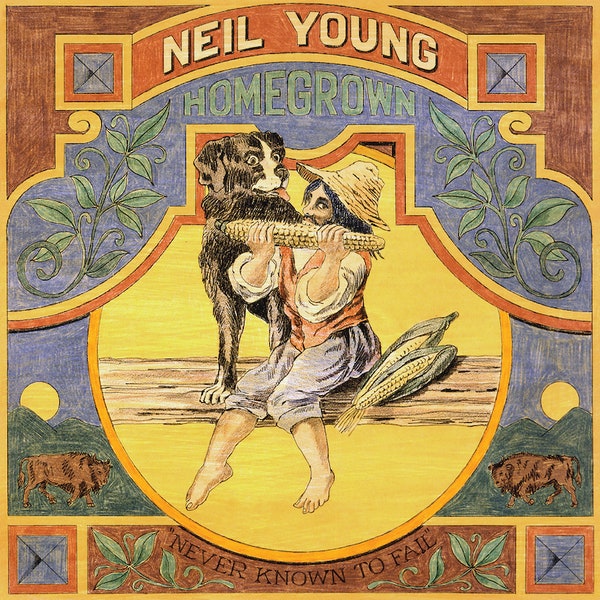
And now, we move from another addition in the ever-growing discography of a folk rock singer-songwriter legend, to…another addition in the ever-growing discography of a folk rock singer-songwriter legend. Seriously, new Bob Dylan and new Neil Young in the same day? Alright sure, I’m down. Once again, new releases have virtually slowed to a crawl, and if these old dogs are giving me something to talk about, I welcome it. What makes this Neil Young release so interesting is that it’s actually an album of unreleased material, written and recorded in 1974 and 75. We’re talking right at the heart of Young’s songwriting peak. And I must say, learning this really peaked my curiosity. And yet, at the same time, I was a bit skeptical. I mean, this music was written during the same era as Young’s all-time great classics, only to sit in the vault, untouched for nearly half a century. How good could it really be? A couple spins later, I’m happy to report that the quality of the music definitely isn’t the problem with Homegrown. The ideas here are as good as you might expect from mid-70’s Neil Young. They are, however, extremely undercooked and unfinished. The songs err on the short side, and the instrumentals are extremely minimalistic. But unlike the minimalism on Dylan’s new album, which seemed intentional, and worked for the most part, these songs have something of a first draft feel to them. Like much of Young’s music from this time period, slide guitars and pianos are prominently featured, along with the traditional rock band lineup, but they don’t feel exceptionally tight here. These songs give the impression of being the products of very brief, sporadic jams, amounting almost to a glorified demos album, with its overabundance of background noodling and studio banter. But as I said before…the songs themselves, though half-baked, are extremely good. And given that they were written nearly half a century ago, I think I’d rather hear them this way than for Young to have attempted to finish them now, coming from an entirely different age and mindset. Homegrown doesn’t come anywhere near feeling like a complete or coherent project, but at the end of the day, there are some genuinely great songs here, and I’m glad we finally get to hear them.
Score: 3.5/5
 Phil Klinker Music Reviews