Joan of Arc – Tim Melina Theo Bobby
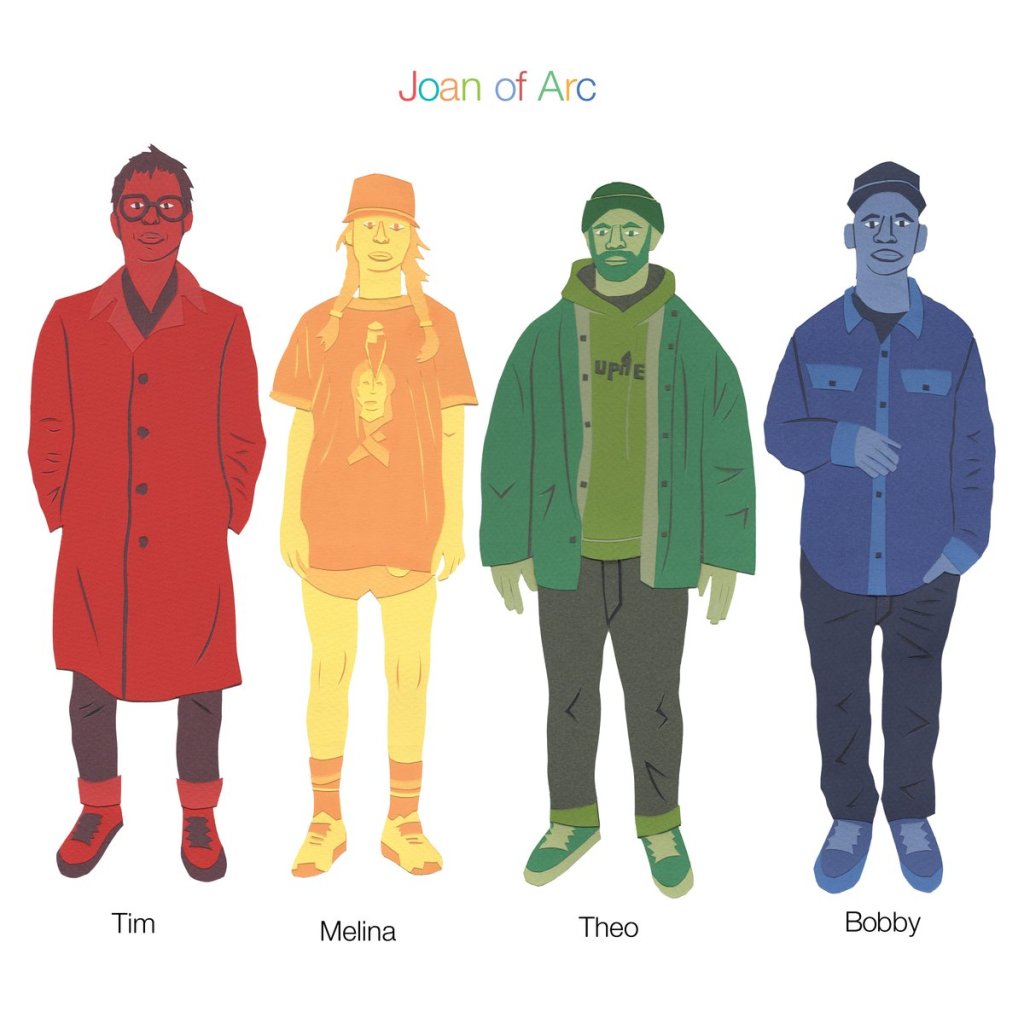
Some of you may have noticed that I don’t talk very much about post-rock around here. And that’s not because I have anything against the genre, so much as that I just never really caught the hype train. But all that aside, virtually nobody releases new music in December, so I really have to take what I can get. And I figured this being Joan of Arc’s final album makes it worthy of discussion. So what do we get from Joan of Arc’s farewell to the world? Look, even as someone who hasn’t heard nearly all of this band’s massive body of work, I can tell you that this isn’t the band’s best. It comes off as shaky and uneven, the lyrics walk a fine line between brilliance and nonsense (then again, that can be said of this entire genre), and it goes in a lot of different directions, seemingly uncertain of what it wants to be. But by that same token, it also functions as a good sampling of everything this band has been capable of for the last quarter century. We get the lush, sleepy indie moods that made them famous, some darker, more grim moments, and several industrial and electronic passages as well. Tim Kinsella and Melina Ausikaitis split lead vocals pretty much 50/50, making this a best of both worlds experience. As I said before, this one can be a little rough, and it’s certainly nowhere near the quality of their masterpiece debut, but it ultimately functions as a respectable and satisfying sendoff for Joan of Arc.
Score: 3.5/5
The Network – Money Money 2020 Pt II: We Told Ya So!
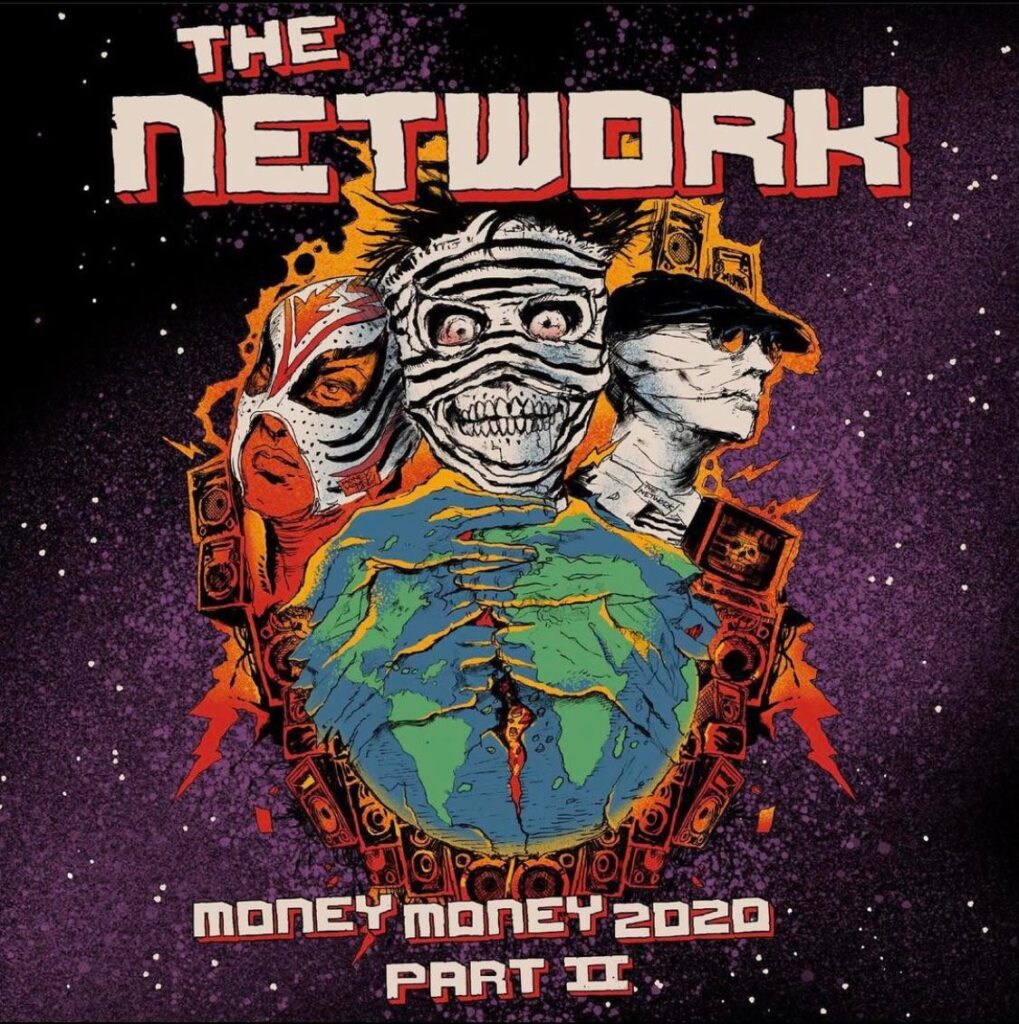
In 2003, this mysterious, masked new wave band, who totally aren’t Green Day (if you know, you know) released their debut album, Money Money 2020, a concept album in which the band claimed to be prophets from the future, and warned that the year 2020 would be a disaster. So naturally, with how alarmingly correct they were, they’re back 17 years later, with the aptly titled Money Money 2020 Pt II: We Told Ya So! And with song titles like “Flat Earth,” “Pizzagate,” and “Ivankkka is a Nazi,” any subtlety that the band’s first album held has gone out the window with this one. While the lyrical content is much more forward on this one, the band’s musical structure hasn’t changed much, meshing a very Green Day-like punk energy and approach to instrumentation, with silky, 80s new wave synth textures. Lead vocals are split about 50/50 between guitarist Fink (who sounds strikingly similar to Billie Joe Armstrong) and bassist Van Gough, with drummer The Snoo even taking vocal duties on a small handful of songs. All three contribute vocally to the new wave theme, taking cues from the deep, half-chanting vocal style associated with bands like The Talking Heads, The Cars, and Modern English. If there’s a major downfall to this album, it’s the length. There’s no reason for this to be nearly an hour long, as only about half of these songs have longterm replay value. In fact, the brief length of the first record is a huge part of what made it so effective. Even if this record amounts to little more than a novelty, and likely won’t be remembered a few years down the road, it’s a fun, timely, topical little excursion that’s definitely good for a spin or two.
Score: 3/5
YUNGBLUD – weird!
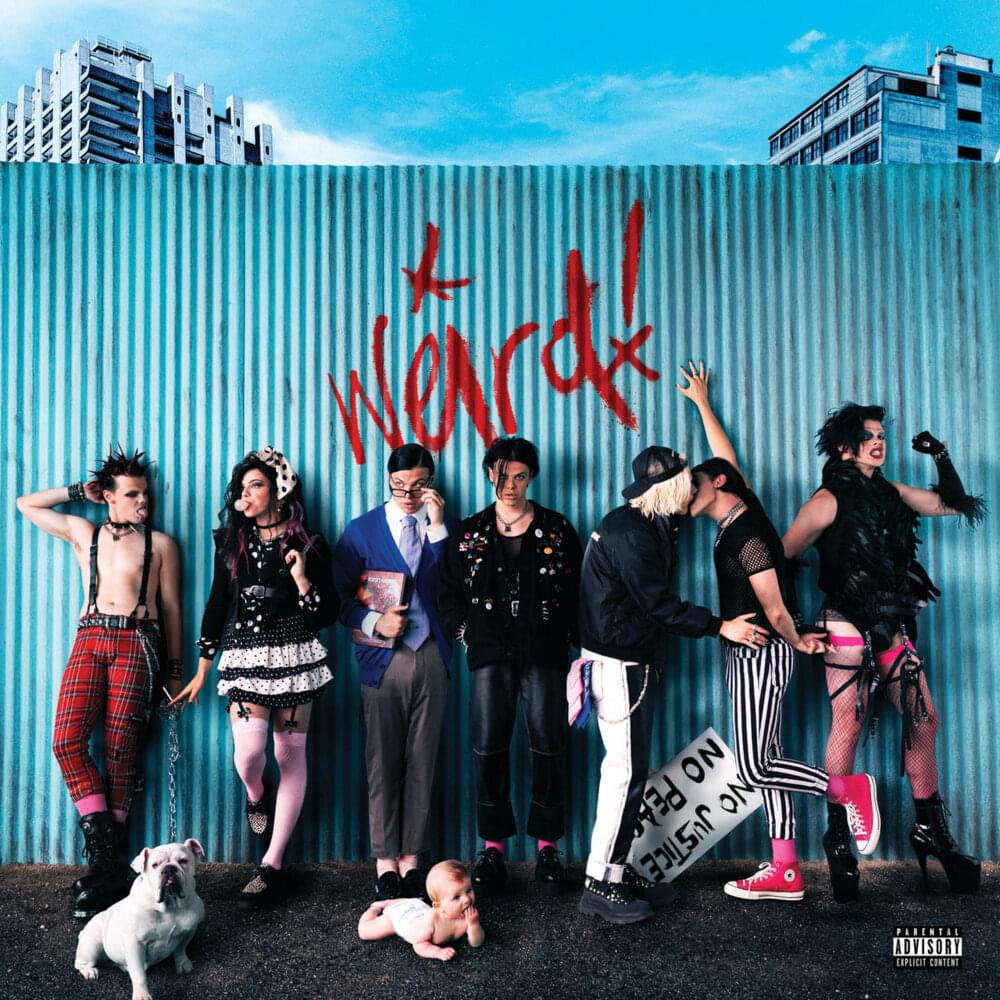
I’ll admit, it isn’t always easy to go into an album with an open mind. Especially when the artist is an insufferable, pseudo-emo brat like YUNGBLUD. But alas, it’s my job to look past that, and form an opinion based on the music, and the music alone. And with that in mind, I can at least say that this album is leagues better than YUNGBLUD’s nearly unlistenable debut album, 21st Century Liability. With this one, YUNGBLUD shows more versatility, offering a greater breadth of moods and lyrical themes, dabbling in softer moments that contrast against his usual snotty pop-punk sound, and offering lyrical passages that at times actually seem vulnerable and genuine. All that being said, this is still very much a YUNGBLUD album. YUNGBLUD’s douchey personality and obnoxious vocal inflections are pretty much inescapable, souring even some of the better moments this album has to offer. And for every song that’s actually somewhat lyrically interesting, there’s another that’s wrought with YUNGBLUD’s trademark faux-intellectual “we live in a society” drivel. The entire atmosphere of this album can be a little confusing, with the harsh, 2000s emo style of YUNGBLUD’s vocals, and his backing instrumentals, glossed over with very modern pop production. And while this formula can be done well, Palaye Royale’s new album from earlier this year is a much better example of that. Ultimately, it’s nice to see YUNGBLUD growing and maturing as an artist (at least a little bit), but at the end of the day, his biggest obstacle is his presentation of himself, and its not an obstacle he seems to have plans of overcoming anytime soon.
Score: 2/5
Paul McCartney – McCartney III
And to conclude the year in major rock releases, we have, appropriately, one more quarantine project, this time from one of rock and roll’s greatest living treasures. McCartney III gives listeners the feeling that Paul McCartney went into the studio with no prior conceptual outline, and just wrote. Like some of McCartney’s classic works, the instrumental parts on McCartney III are almost entirely recorded by McCartney himself. And it’s clear he had fun. With all the free time he had, McCartney was able to play around with layering vocals and instrumentals in weird, zany ways, harmonizing with himself on guitar, and psychedelic mellotron tones. The general feel of the record is fairly laid back with acoustic guitar and piano often at the forefront, while the drums and electric guitars grab their own share of the spotlight on a handful of mid-tempo blues romps. And perhaps best of all, McCartney’s voice still sounds amazing. Typically by the time rockers reach McCartney’s age, their voices have long since started to go, but McCartney still sounds every bit as good as he did on Rubber Soul. And above that, his passion and enthusiasm haven’t waned a bit. Realistically, it’s pretty unlikely that any of these songs will be immortalized as McCartney classics, as this record comes nowhere near the top-to-bottom masterpiece status of his earlier records (let alone his Beatles output), but it’s clear when you listen to McCartney III that Paul McCartney is still madly in love with writing, creating, and putting a little bit of goodness out into the world. And as a longtime fan, I couldn’t be happier about that.
Score: 4/5
 Phil Klinker Music Reviews